The Models Tell the Story: Sketchnotes from Model of the Month #60
They say that 60 is the new 40. However, the 60th Model of the Month session was the start of a new journey — an intentional walk through The Collaboration Code: Models — co-hosted by Rob Evans and Svenja Rüger with The Value Web Learning Community.
Over the next months, we will be moving model by model, in sequence, as they were meant to be experienced by Matt and Gail Taylor, and not experienced as a step-by-step progression, but as an inter-relational Glass Bead Game.
We even dove into the original 1997 MGT website, which is still out there, blinking at us from across the broadband era.
The (virtual) room was a good one — practitioners with 40+ years of experience in collaborative design and the MGT method, alongside newbies and folks coming in sideways from other disciplines. That mix is the whole point.
Why Model?
Models aren't the thing. They're a way of pointing at the thing — whether it is too large, too microscopic, too messy, or too abstract to get our minds around.
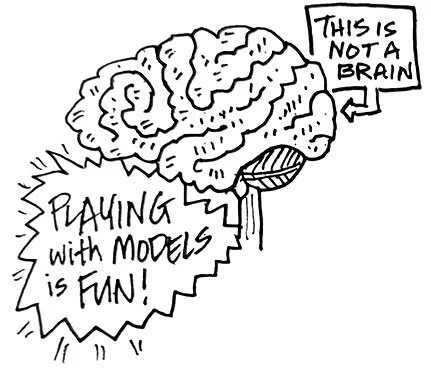
I drew a brain in my sketchnotes with a little flag next to it ("this is not a brain"), a nod to Magritte's pipe, which famously isn't a pipe either. The title of the painting is actually “The Treachery of Images.“
A map isn't the territory. Neither is a drawing.
We know this. We make 'em anyway, because we are wired to. Models are how we wrestle abstractions into something we can hold, turn over, argue about, and pass to the next person in the room.
So how did the participants answer the question?
The list of making and using models got long fast — models as diagnostics, as design guides, to set boundaries, to expand, to experiment, to teach, to make the abstract tangible enough to point at.
Underneath it all, humans are wired to make models. It's how we understand and interact with nature. And — the part nobody says out loud in most professional rooms — playing with them is fun!
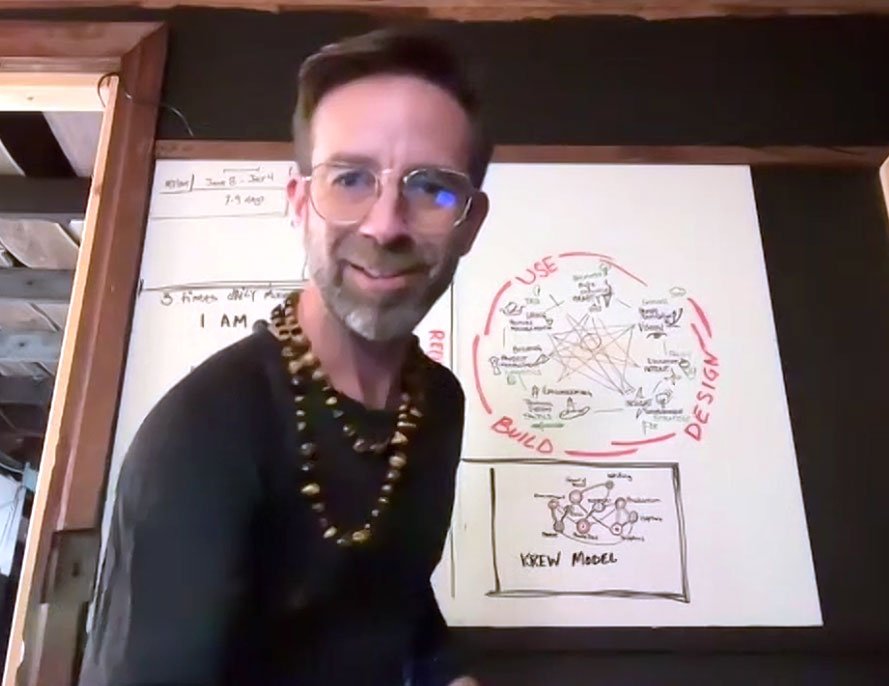
Ryan Romsey was modeling the model-maker behavior in real time, building mashup models on his home office whiteboard while the rest of us talked (see screenshot). That's the move right there — make the thing while you're discussing the thing.
The Models We Don't Have Yet
The most interesting stretch of the conversation was about the models we're missing. Four gaps came up that I'm still chewing on:
An intergenerational transition and collaboration model. What actually shapes each generation, and how do we get to something like "gentelligence" — Megan Gerhardt's term — instead of the usual eye-rolling across the conference table?
A business development model for this work. The perennial sumbitch of a question for anyone who facilitates, convenes, or draws for a living: how does it actually sustain itself?
A model for convening a group around an emotional issue. Not a logistical one. An emotional one. Different gravity entirely, and most of our toolkits don't account for it.
A “KreW“ model. How teams form, hold, and dissolve around the work itself.
The throughline: one model is never enough. Any single frame flattens what's actually happening. You need a few of them, held loosely, swapped in and out as the room calls for it. The minute you fall in love with one, it stops being a tool and starts being a religion.
On Serendipity
Mentioned by the wonderful Robert Darling, this deserves its own paragraph. Books on the shelf you haven't opened. A half-remembered idea from a podcast. The sideways connection between somebody else's problem and yours. Serendipity isn't a nice-to-have — it's load-bearing. You can't put it on a Gantt chart, but you can design rooms that make it likelier. That's most of the actual job.
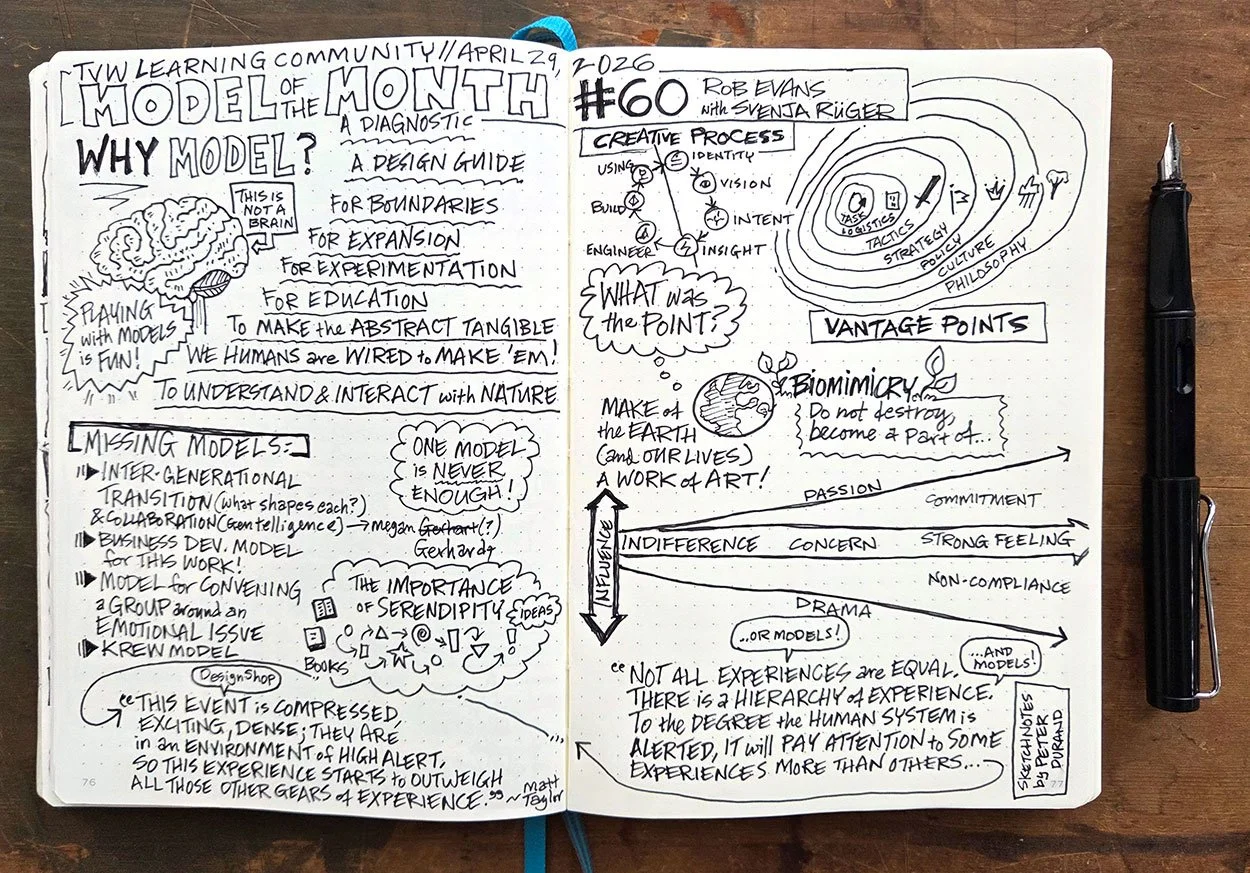
Attached are my scratchy sketchnotes from this rich 90-minute conversation, which began with the question “Why Model?“ and spiraled through individual experiences, provocative questions, and shared exploration of model-making as a core human behavior.
Matt Taylor on Why This Works When It Works
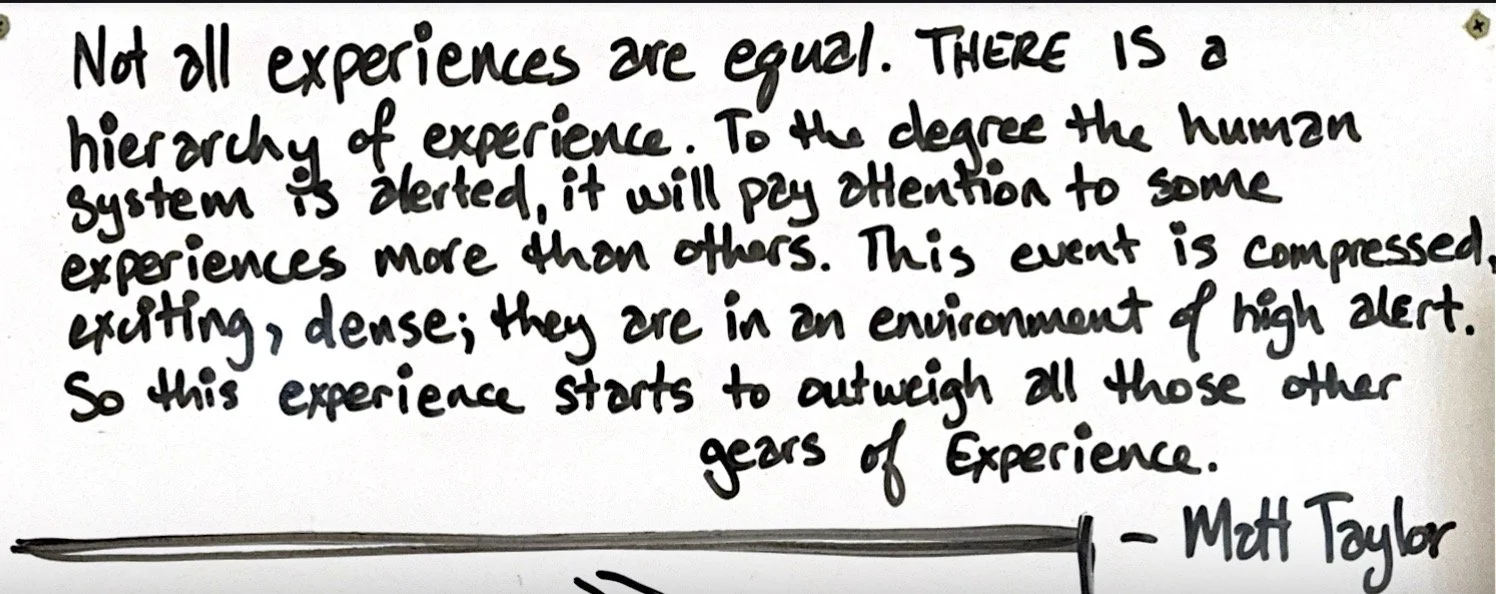
We closed with a line from Matt Taylor that I keep coming back to:
"This event is compressed, exciting, dense; they are in an environment of high alert, so this experience starts to outweigh all those other gears of experience."
That's the case for convenings, in one sentence. The compression is the medium. Ordinary time gets thin. Whatever happens in the room has disproportionate weight — and that's not a side effect, it's the point.
****
Learn more about The Collaboration Code - https://www.collaborationcode.com/
You can see more of my personal sketchnotes and learning journals at: https://www.alphachimp.com/sketchnotes
LEARN MORE
See our graphic recording images from presentations during Houston Energy and Climate Week.
Learn about our graphic recording services and how visual facilitation drives innovation.
See what Alphachimp is up to in the Houston Innovation Ecosystem.