Two facts: life ain't easy for farmers and ranchers, and Texans are resilient. Both were on full display in Desdémona, Texas, at the 2026 Rural Resilience Summit. Yes, that included scribing in a bull pen. Check that off the bucket list!
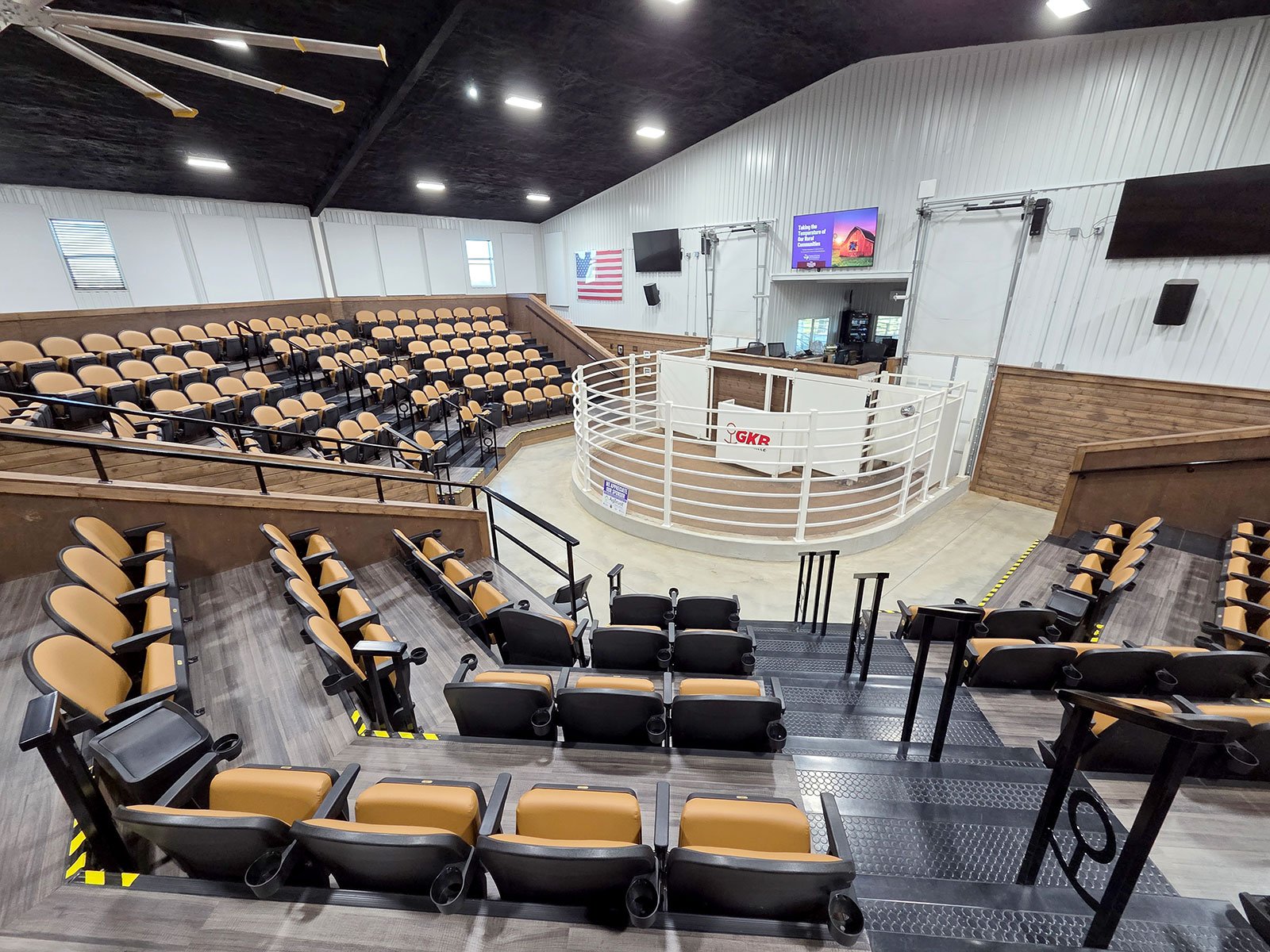
PHOTO: GKB Cattle auction room and bull pen.
Dr. Jean Lonie, assistant professor and co-director of the Center for Rural Resilience at Tarleton State University, invited me to the second annual summit, hosted by the Texas A&M University System. Tarleton's own news recap of the summit covers the program and speakers. This post is the view from the easel.
Why a Houston Highways guy was drawing in rural Texas
I've lived in Houston for five years and spent most of that time in the city's innovation circles. I had never really sat down with the people who work the land in a state that ranks first in the nation for farms and ranches.
That gap was worth closing.
The numbers in the room explain why the summit exists. Texas also ranks first for residents without health insurance and fiftieth for access to rural mental health care.
Researchers, advocates, centers, and programs came together to work on rural health, infrastructure, agriculture, education, and workforce development, all in the same conversation instead of in separate silos.
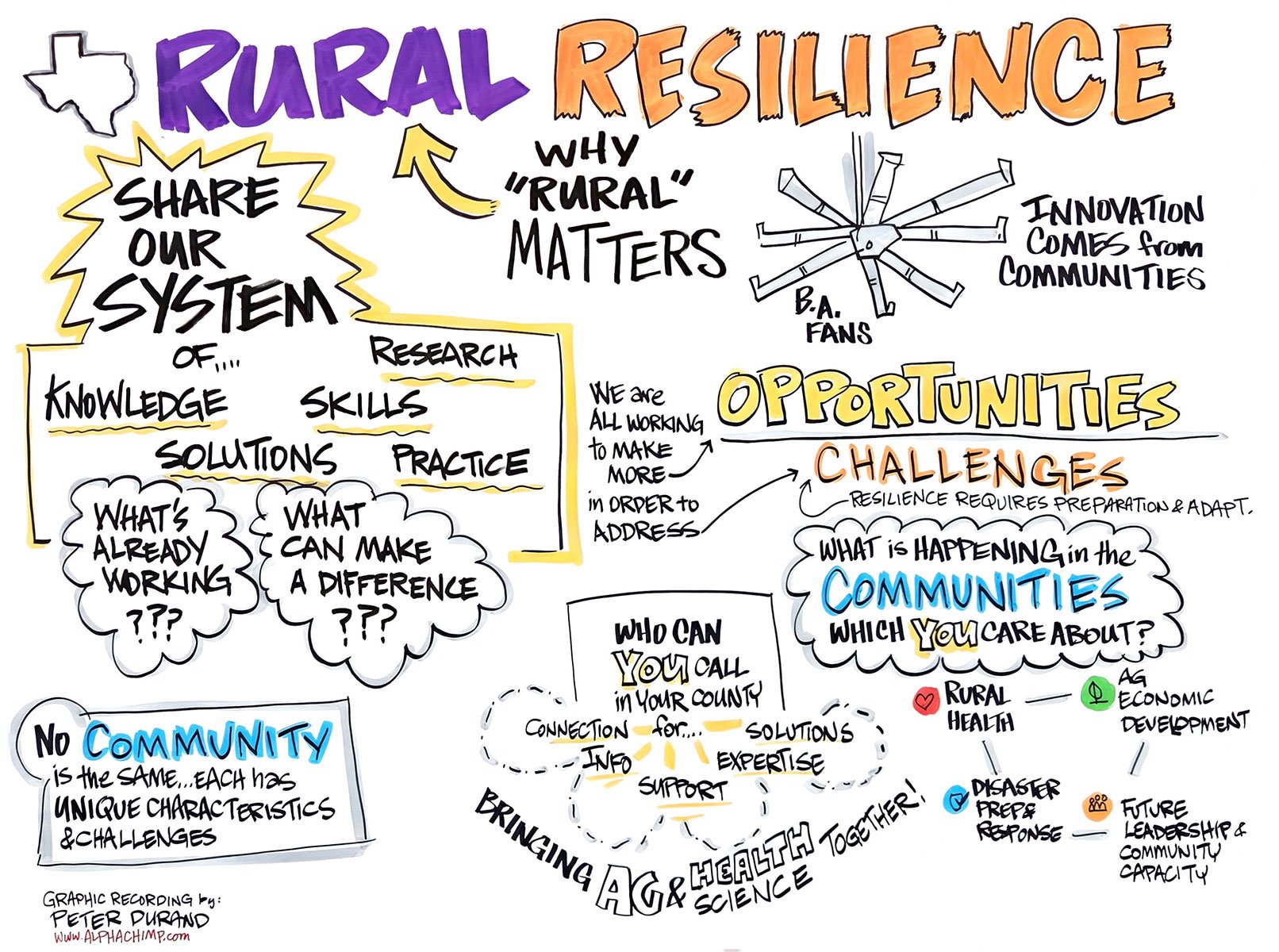
IMAGE: Graphic recording titled Rural Resilience with a Texas outline, a Share Our System burst, Why Rural Matters, and a sketch of a giant industrial ceiling fan. Opening remarks from Tarleton State President Dr. James Hurley, including a story about a very large fan. IYKYK.
A system, not a single program
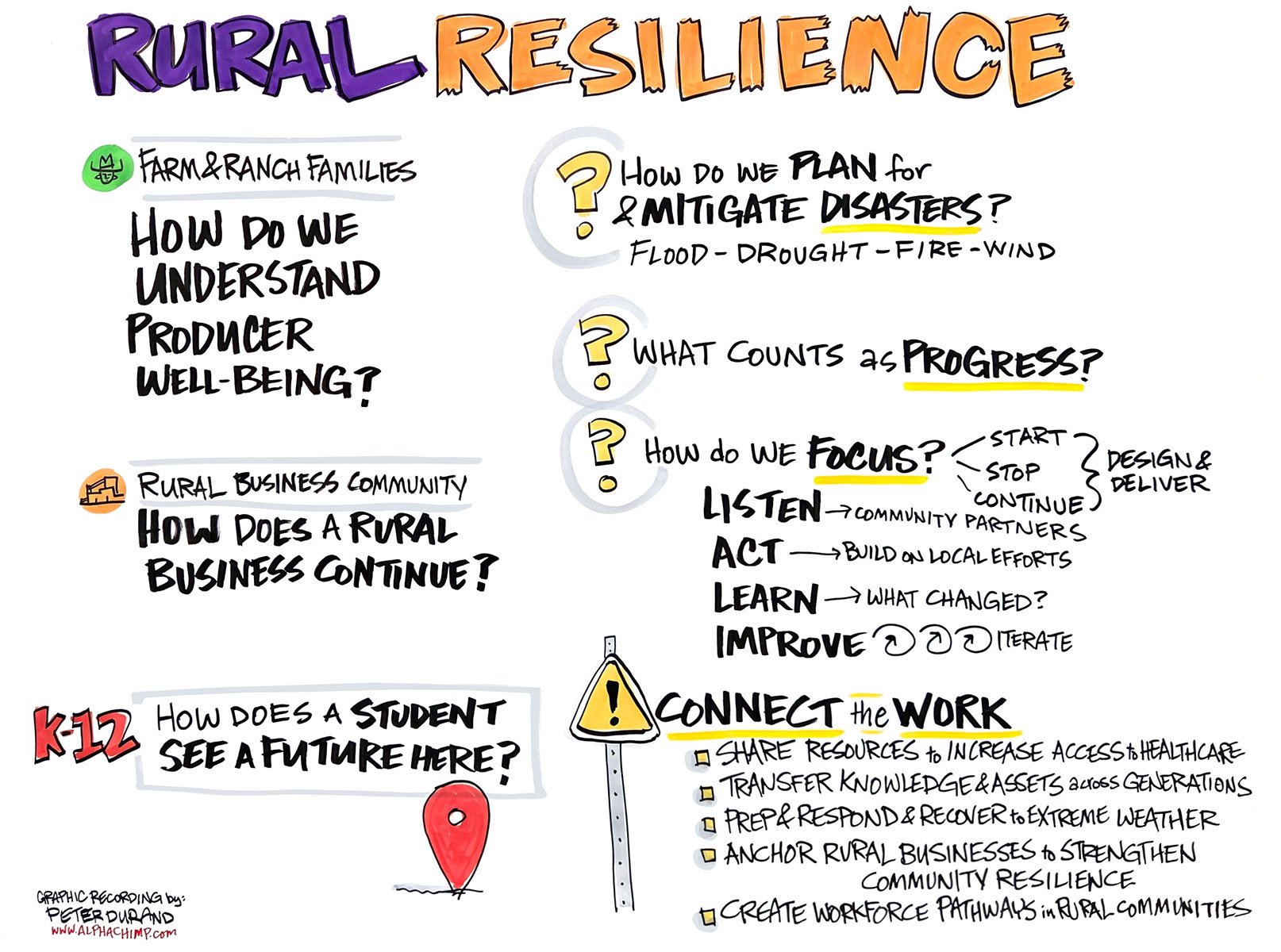
ABOVE: Graphic recording on rural resilience posing questions about producer well-being, disaster planning, and progress, with a Listen-Act-Learn-Improve loop and five ways to connect the work.
The Texas A&M System (TAMUS) wants to be recognized as the academic system that moves the needle on rural resilience. The aim is measurable results in five areas:
expanding rural health access
strengthening agricultural and economic sustainability
improving disaster preparedness and community well-being
building education-to-workforce pipelines
growing the next generation of rural leaders
The questions on the boards reflect that range: How do we understand the well-being of farm and ranch families? How does a rural business keep going? How does a student in a small town see a future there? And what counts as progress?
Leadership across the system
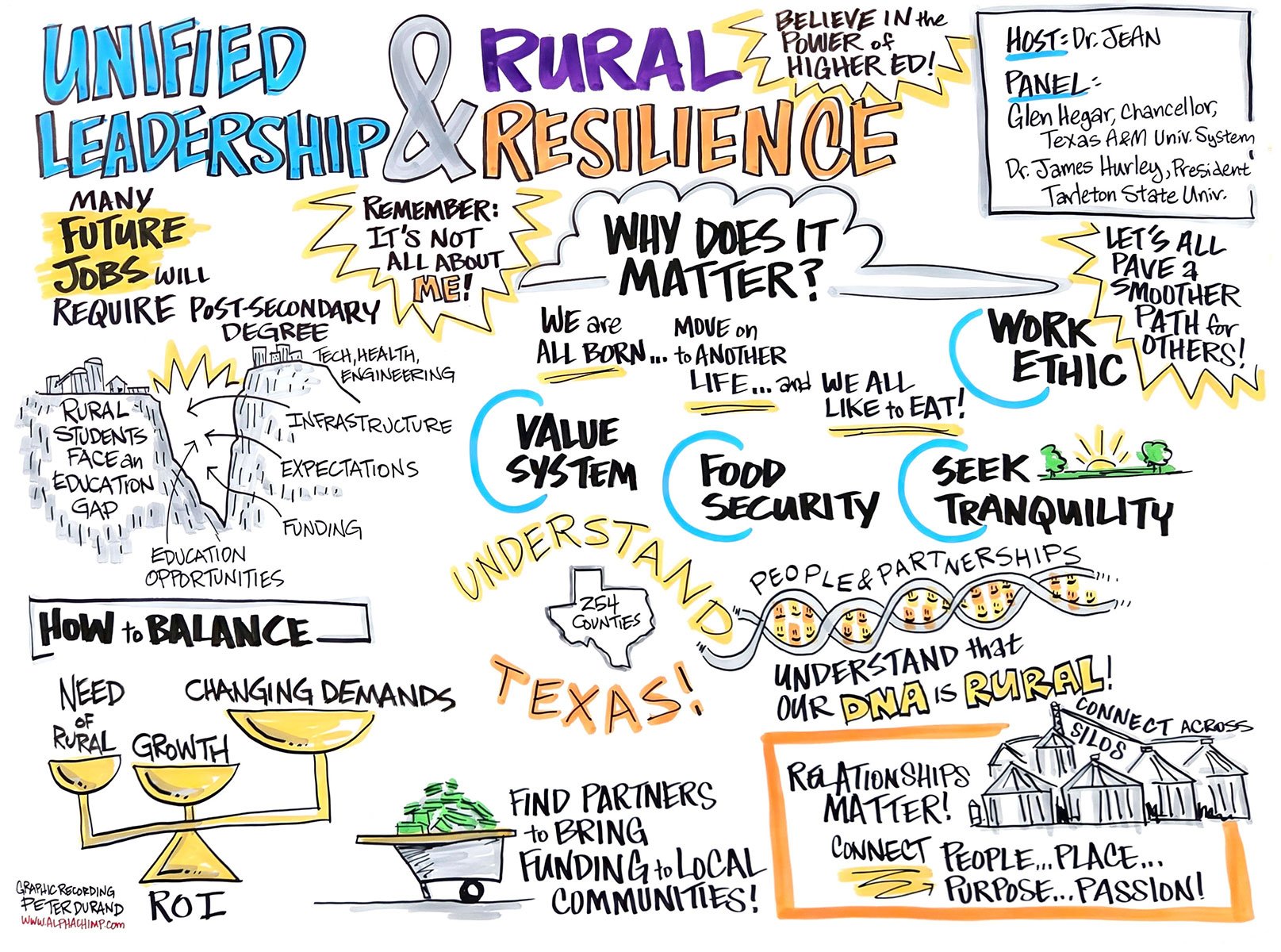
ABOVE: Graphic recording of the Unified Leadership and Rural Resilience panel with Texas A&M System and Tarleton State leaders, covering the rural education gap, 254 counties, and relationships.
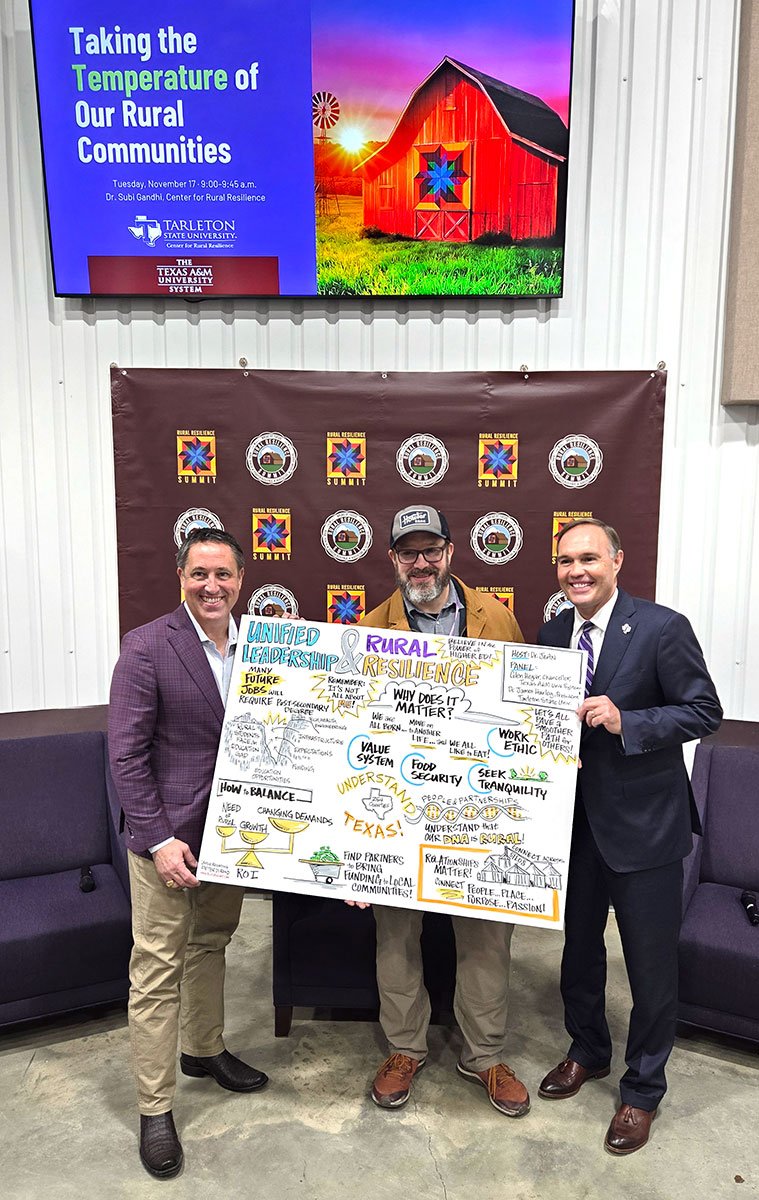
In the discussion with Texas A&M System Chancellor Glenn Hegar and Tarleton State President Dr. James L. Hurley, a common thread ran through their conversation: rural students face an education gap shaped by infrastructure, expectations, and funding, while many future jobs will require a post-secondary degree.
Texas has 254 counties, and the board's refrain was that our DNA is rural.
The takeaway came down to relationships. Connect people, place, purpose, and passion, and find partners who will bring funding to local communities.
The numbers behind the stories
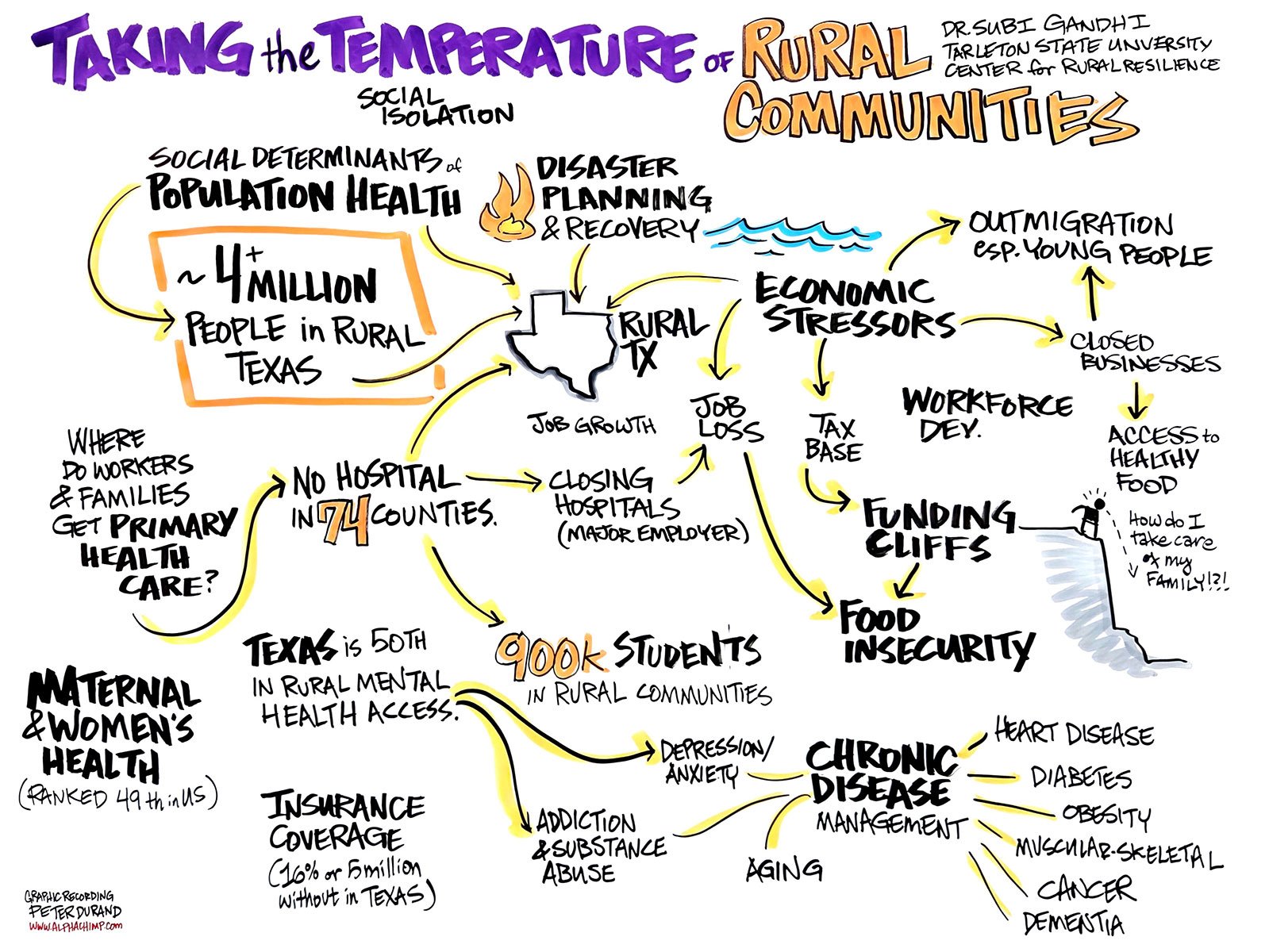
Dr. Subi Gandhi, a professor of Public Health and Co-Director of the Center for Rural Resilience at Tarleton State University, took the temperature of rural Texas, and the picture is sobering.
Roughly four to 5 million people live in rural Texas.
Seventy-four counties have no hospital.
About 16 percent of Texans, around five million people, have no health insurance.
Texas ranks fiftieth in rural mental health access and forty-ninth in maternal and women's health.
Meanwhile 900,000 students attend school in rural communities.
And closing rural hospitals takes a major local employer with it, and the effects spread to jobs, the tax base, and food security.
From silos to solutions
The panel I'd frame and hang on a wall was "From Silos to Solutions," with faculty and leaders from Tarleton's agriculture and health sciences programs.
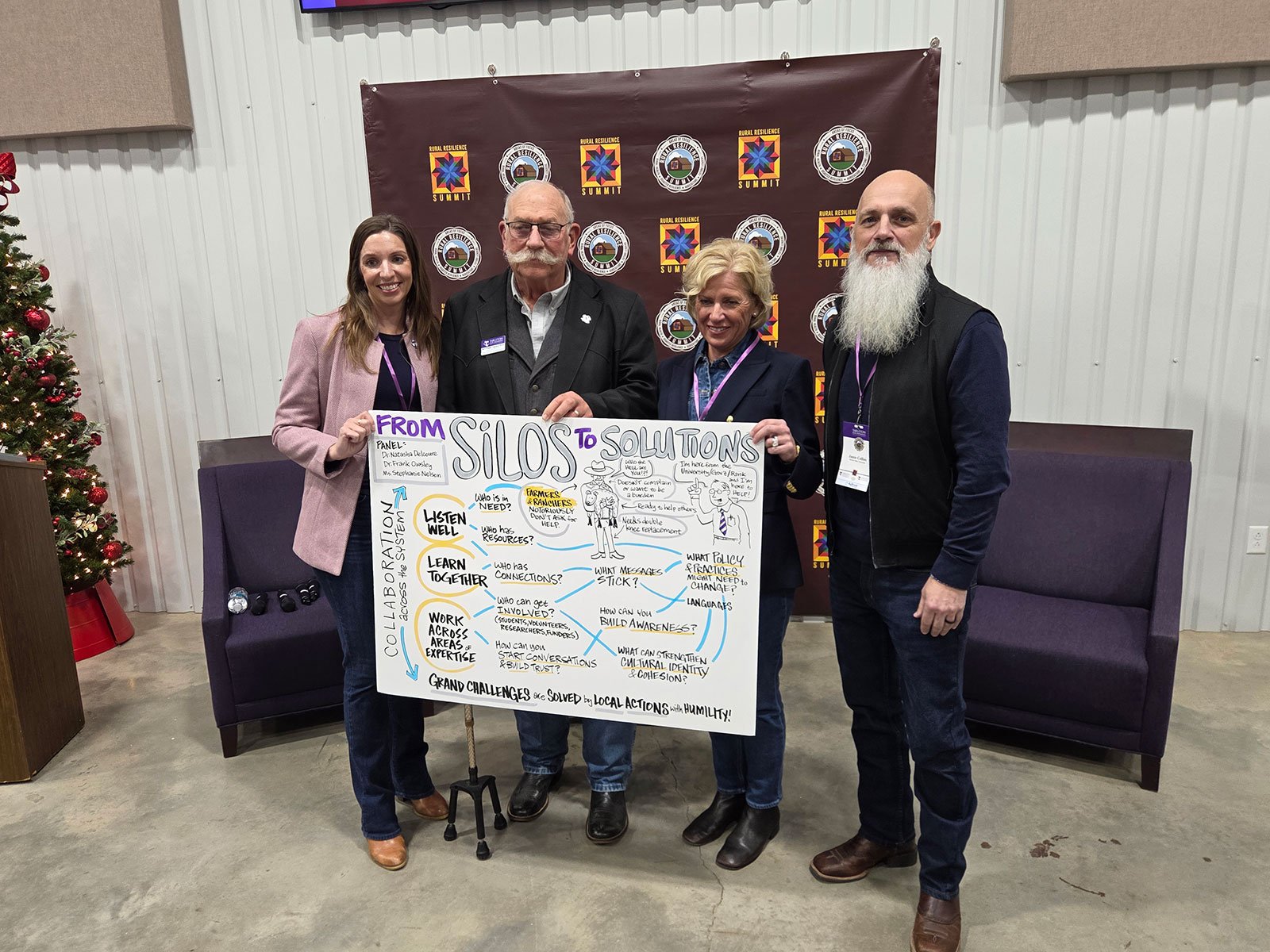
Their playbook is simple to say and hard to do: listen well, learn together, and work across areas of expertise. I sketched the awkward scene they described, a university visitor announcing "I'm here to help!" to a rancher who would never ask.
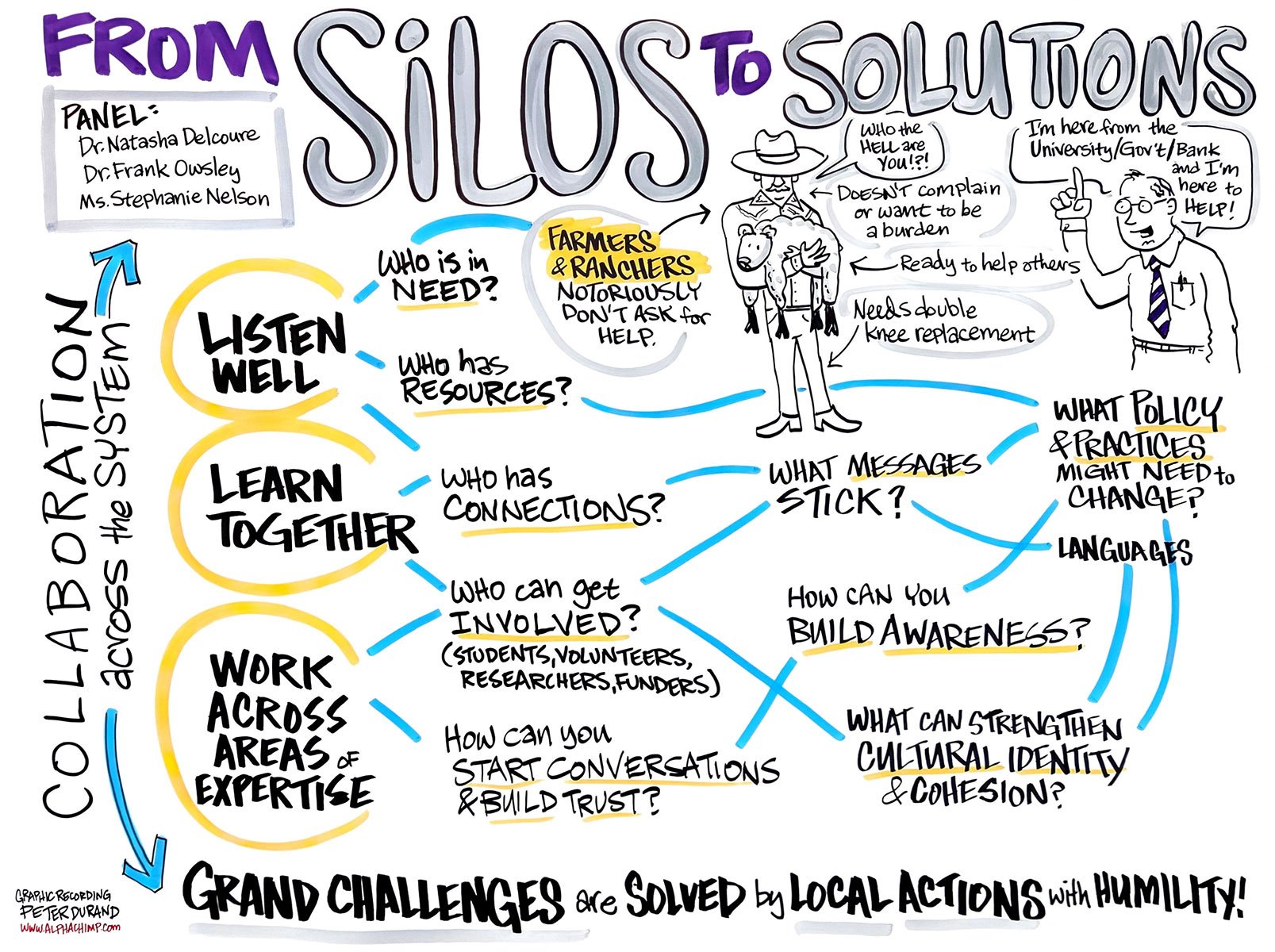
Farmers and ranchers are notoriously reluctant to ask for help, even when they need a double knee replacement.
The panel's closing line made it onto the bottom of the board: “Grand challenges get solved by local actions with humility.”
A garage, a freezer, and a downtown
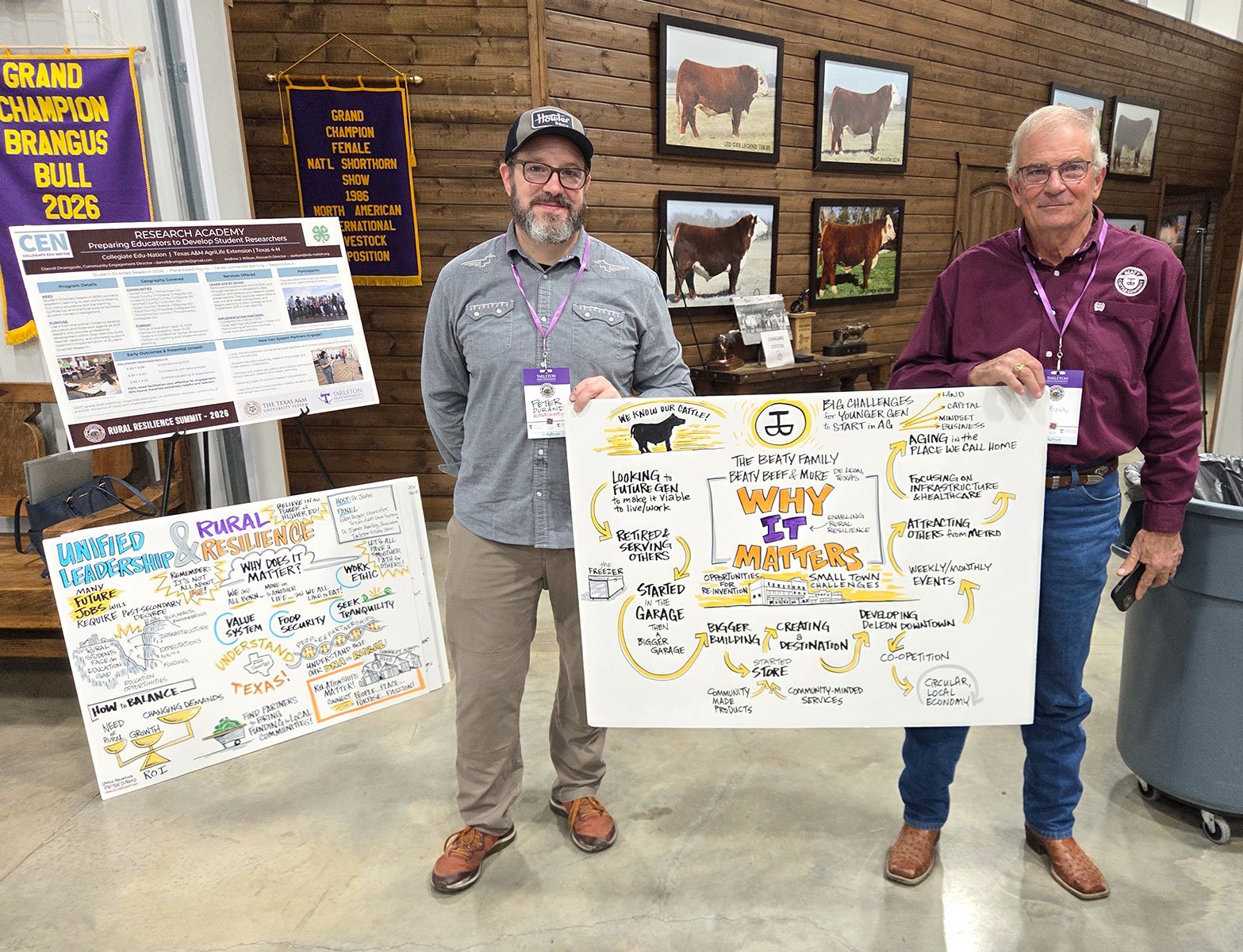
It was a privilege to draw for two brothers, sixth-generation Texans and owners of Beaty Beef & More in De Leon.
Their business started in a garage with a freezer and a simple idea: good food starts with knowing where it comes from. Then came a bigger garage, a bigger building, a store, and now a destination that is helping develop De Leon's downtown.
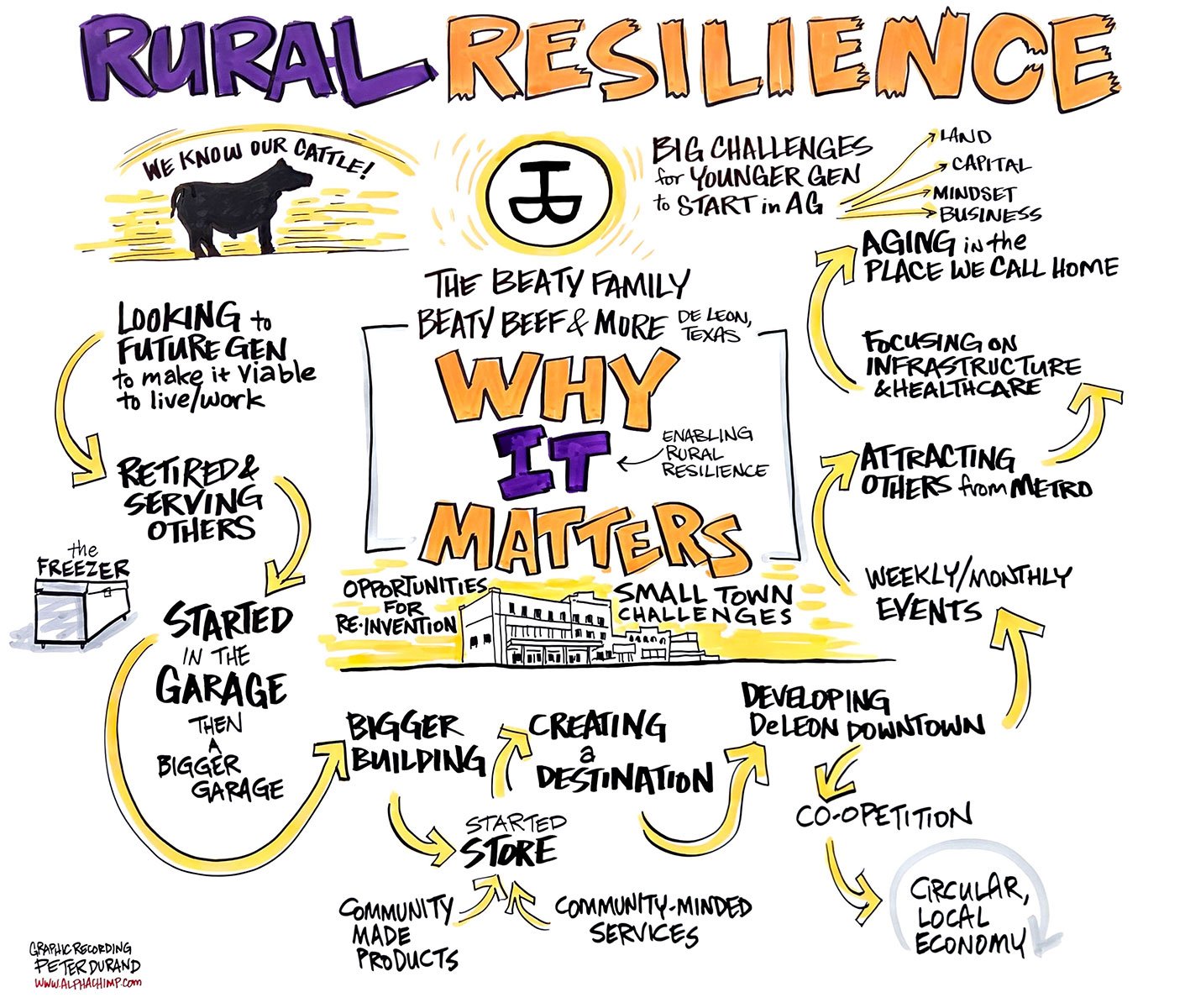
They talked about co-opetition with neighboring businesses, weekly and monthly events that bring visitors in from the metro areas, and a local economy that circles back on itself. They also named the hard part: land, capital, mindset, and business know-how are steep hurdles for a younger generation trying to start in agriculture.
Turning the talk into action
The workshops asked attendees to map what's already working, what's missing, and who should partner.
The closing board pulled the threads together: mobile clinics and training trailers, local training so graduates can stay local, connectivity, shared knowledge about water, power, and health systems, and a tax base that funds the infrastructure to keep it all going.
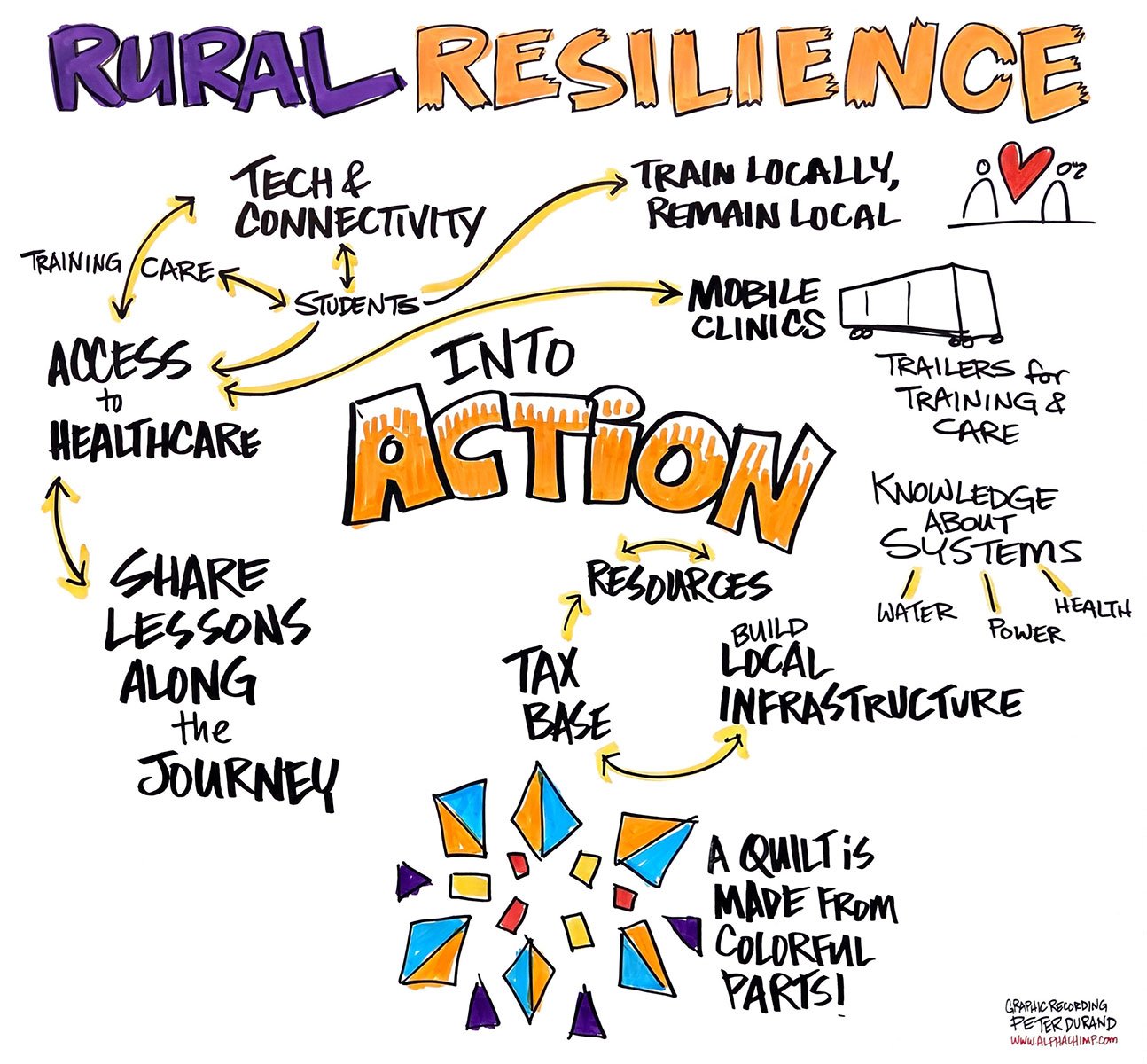
My favorite image from the day is the one at the bottom: pieces of a quilt. A core metaphor used in the Summit and a good reminder that resilience gets stitched together from lots of different, colorful parts.
Why draw this live
A summit like this moves fast: researchers, deans, ranchers, and health leaders all speaking in their own languages. Graphic recording and live illustration pulls those threads onto one wall while people are still in the room, so the group can see how health, agriculture, education, and workforce connect.
Thank you to Dr. Lonie and the Tarleton State team for the invitation, and to every speaker who let me draw their story.
If you're planning a convening where the ideas are too important to lose, tell me about your event.
You can also see how this plays out at other recent events, like the ECC Future Leaders Program and the Greentown Houston Climatetech Summit.