Maternity care deserts, lab-grown tissue, blood pressure cuffs for expecting moms, and a keynote that told the room to grab a broom and get busy!
Two days in Houston at the 2026 Innovation for Healthcare Access Conference, hosted by Rice University's Rice360 Institute for Global Health Technologies, a leader in global health technology education and research, with a distinctive focus on problem-based learning. The Rice360 stated mission is “to innovate for global impact, develop highly effective, low-cost healthcare solutions for underserved communities, and educate future leaders to innovate and implement solutions.”
Rice360's own conference recap has the official rundown. About 300 researchers, clinicians, community leaders, and policymakers came together around one question, “How do we expand healthcare access for women and children in underserved Texas communities, rural and urban, using lessons that travel from global health work to our own backyard?”
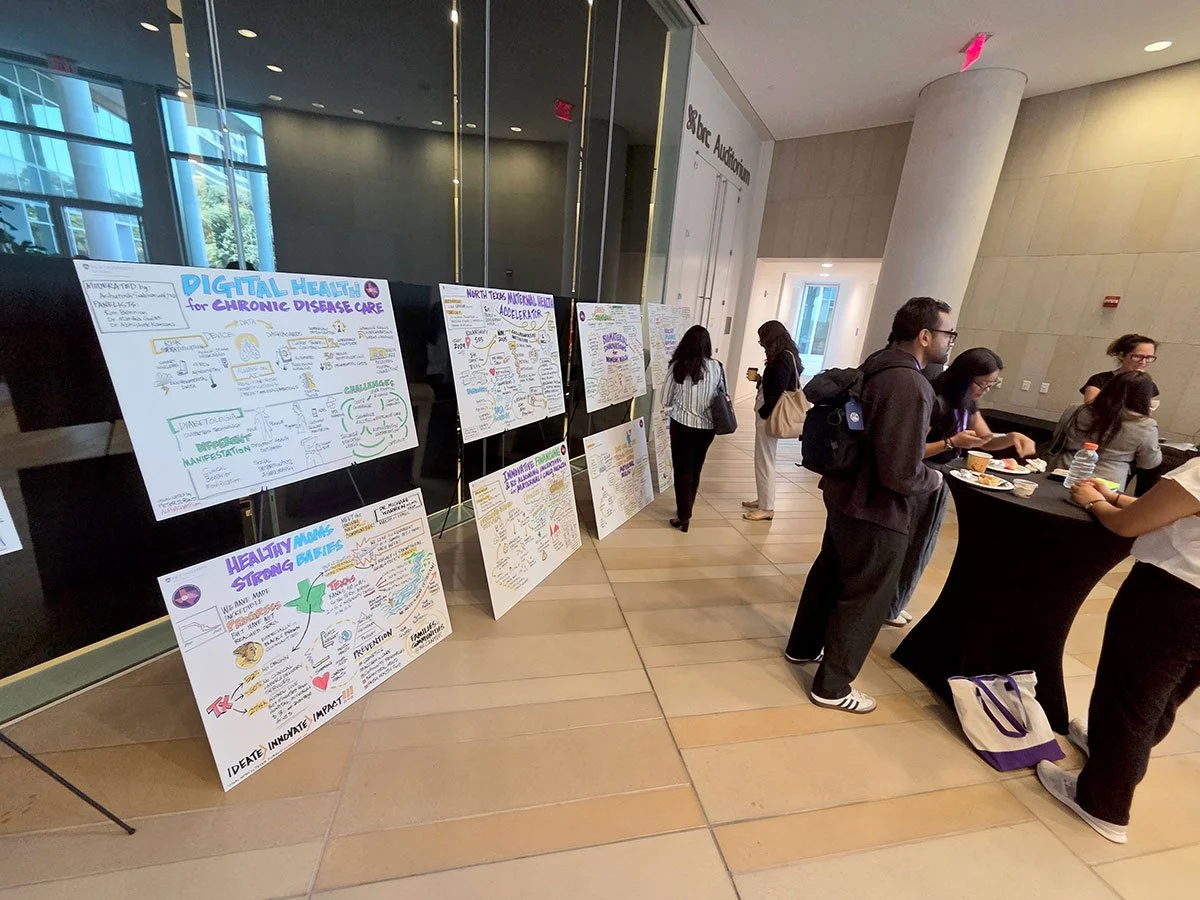
Below are ten of the graphic recordings, grouped the way the ideas connected.
Three keynotes, three angles on the same problem
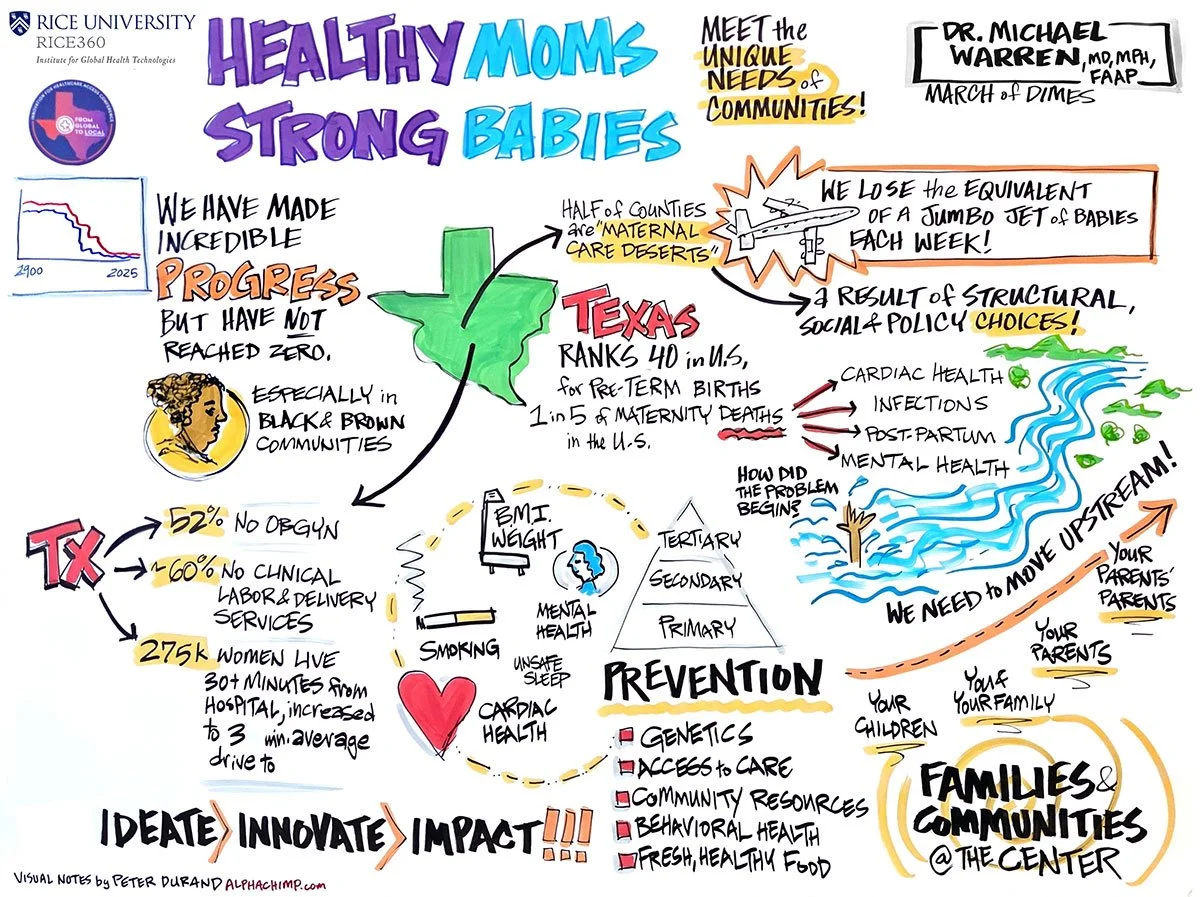
Dr. Michael Warren of March of Dimes opened with progress and its limits. Huge gains over the past century in decreasing the number birth-related of deaths, but we have not reached zero. His numbers for Texas were hard to look away from. About half of Texas counties are maternal care deserts, and roughly 275,000 Texas women live more than 30 minutes from a hospital. He framed the national toll as losing the equivalent of a jumbo jet of babies every week, the result of structural, social, and policy choices. His call to action: move upstream, from care at the hospital door to the families and communities where health starts.
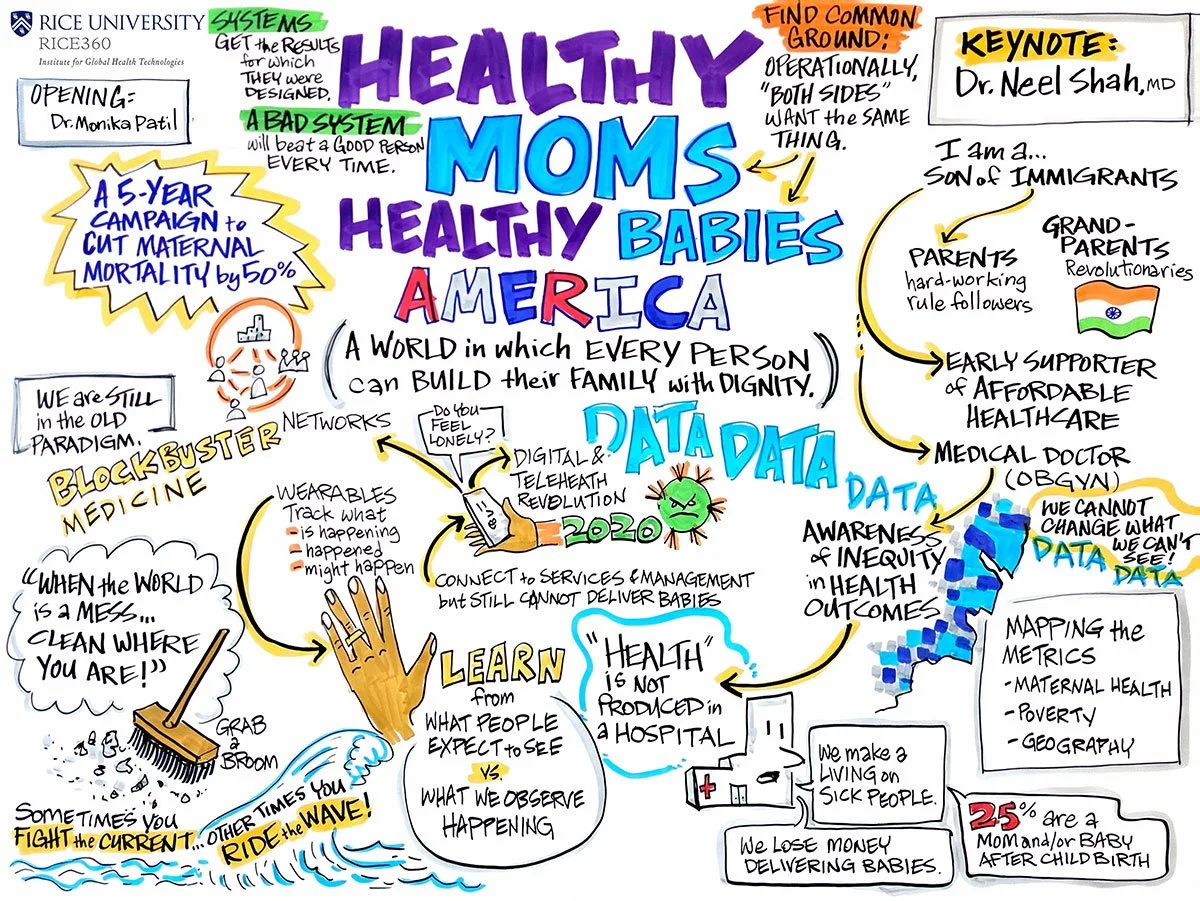
Dr. Neel Shah brought a systems view emphasizing that systems get the results for which they were designed, and a bad system will beat a good person every time. Health isn't produced in a hospital, he reminded the room, and he noted that hospitals lose money delivering babies. He described a five-year national campaign to cut maternal mortality by 50 percent, and he offered advice for anyone feeling overwhelmed, “When the world is a mess, clean where you are. Grab a broom!!!”
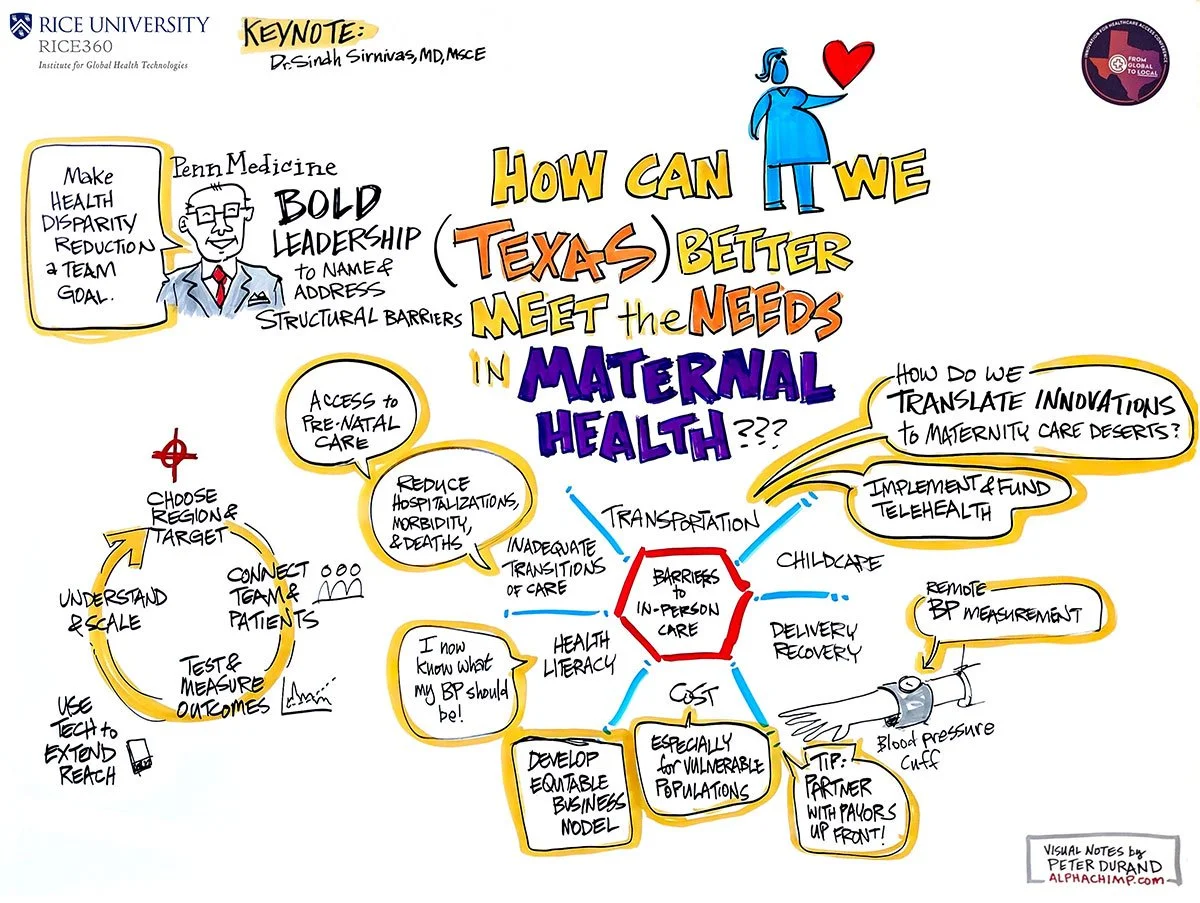
Dr. Sindhu Srinivas of Penn Medicine asked the Texas-sized question, “How can we better meet the needs in maternal health?”
Her answer started with bold leadership to name structural barriers, and with making disparity reduction a shared team goal. She mapped the barriers to in-person care (transportation, childcare, cost, health literacy, weak handoffs between care settings) and a practical cycle for tackling them.
Choose a region and target, connect the team with patients, test and measure outcomes, then scale.
Her tip for funding it is to partner with payors up front.
Maternity care deserts: from map to plan
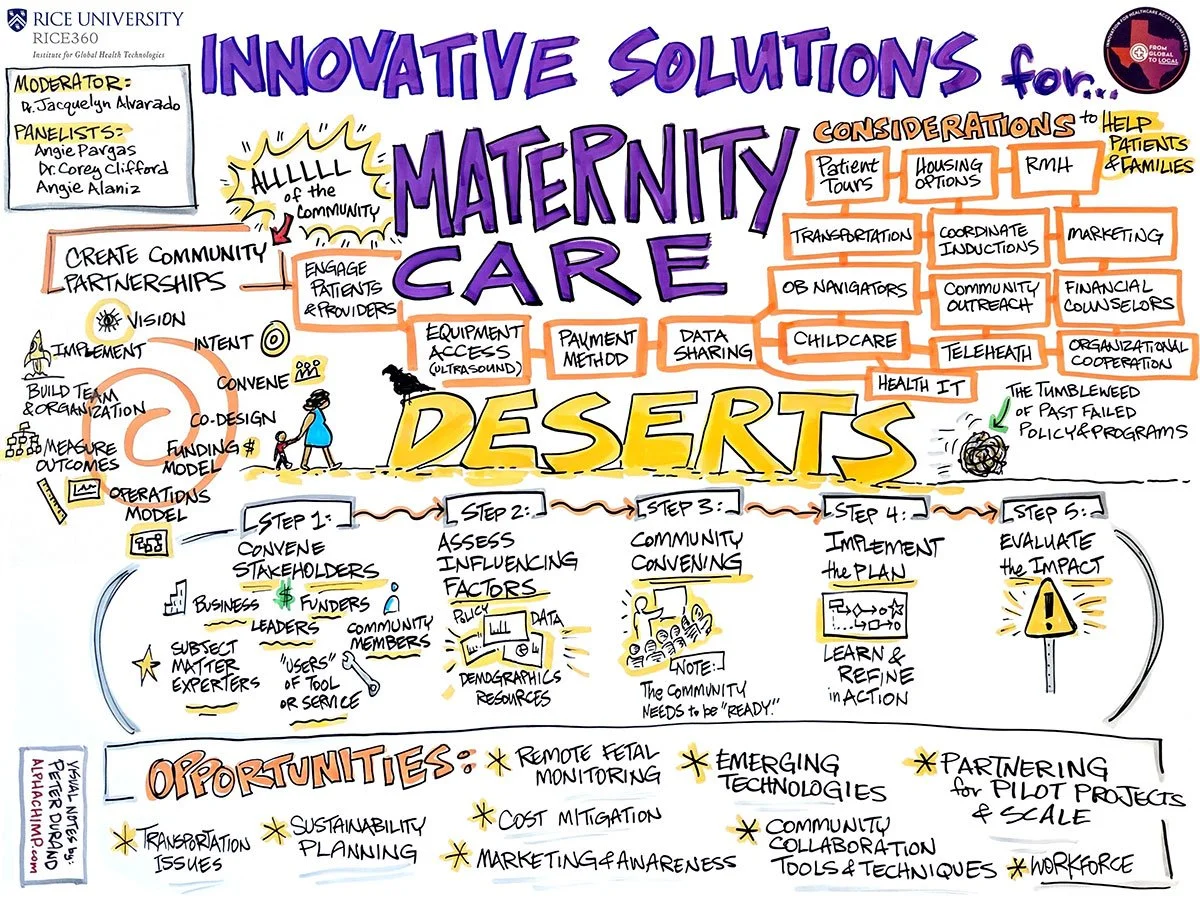
A panel on innovative solutions for maternity care deserts laid out five steps:
Convene stakeholders,
Assess the factors at play,
Hold a community convening,
Implement the plan, and
evaluate the impact.
One thing is for certain — the target community has to be ready! Dusty remains of past failed policy and programs are like tumbleweed rolling through the desert. The opportunity list ran from remote fetal monitoring to partnering on pilots that can scale.
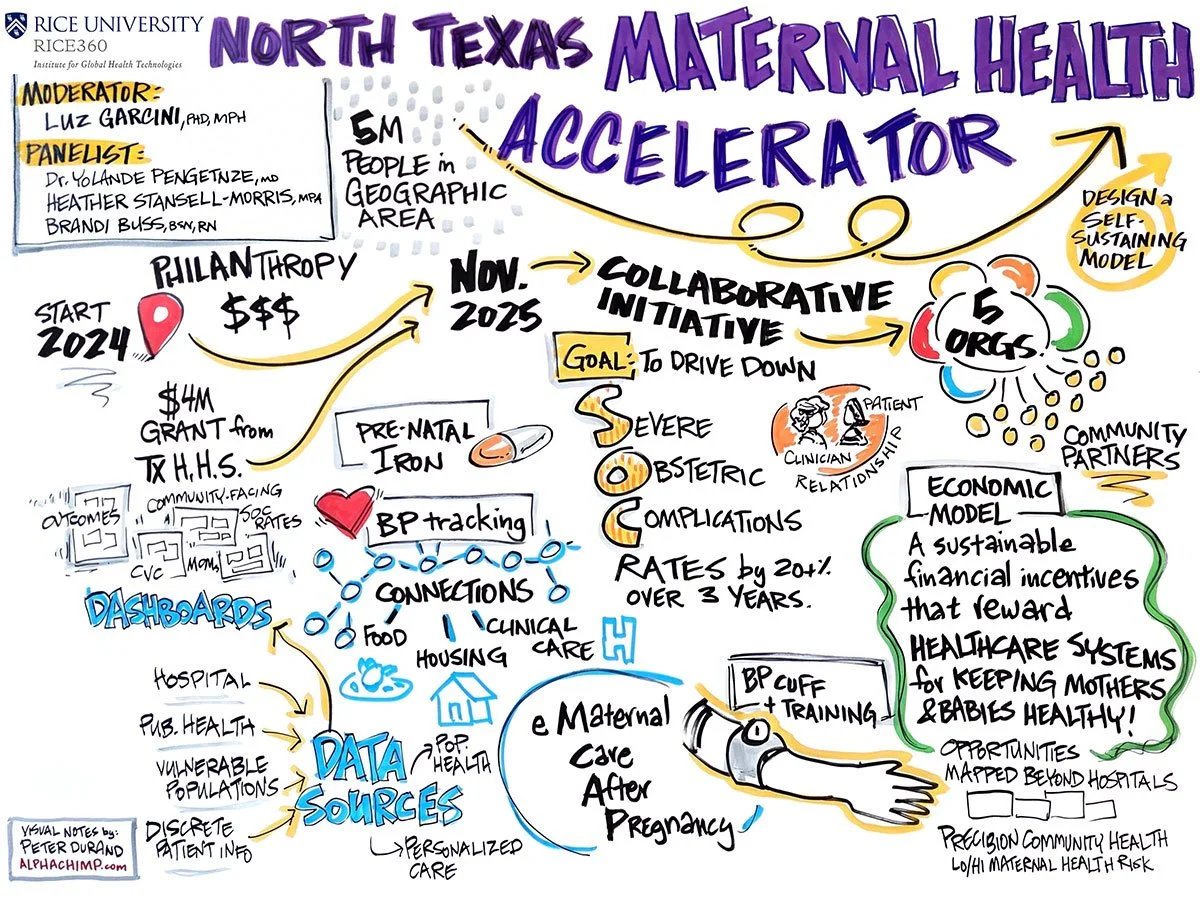
The North Texas Maternal Health Accelerator offered a live example. Funded by philanthropy and a $4 million grant from the Texas Health and Human Services Commission, it grew into a collaborative of five organizations serving a region of about 5 million people. The goal is to bring down severe obstetric complications by more than 20 percent over three years, using blood pressure tracking with cuffs and training, shared data dashboards, and an economic model that rewards health systems for keeping mothers and babies healthy. https://mdschool.tcu.edu/north-texas-maternal-health-accelerator/
Follow the money, then follow the mothers
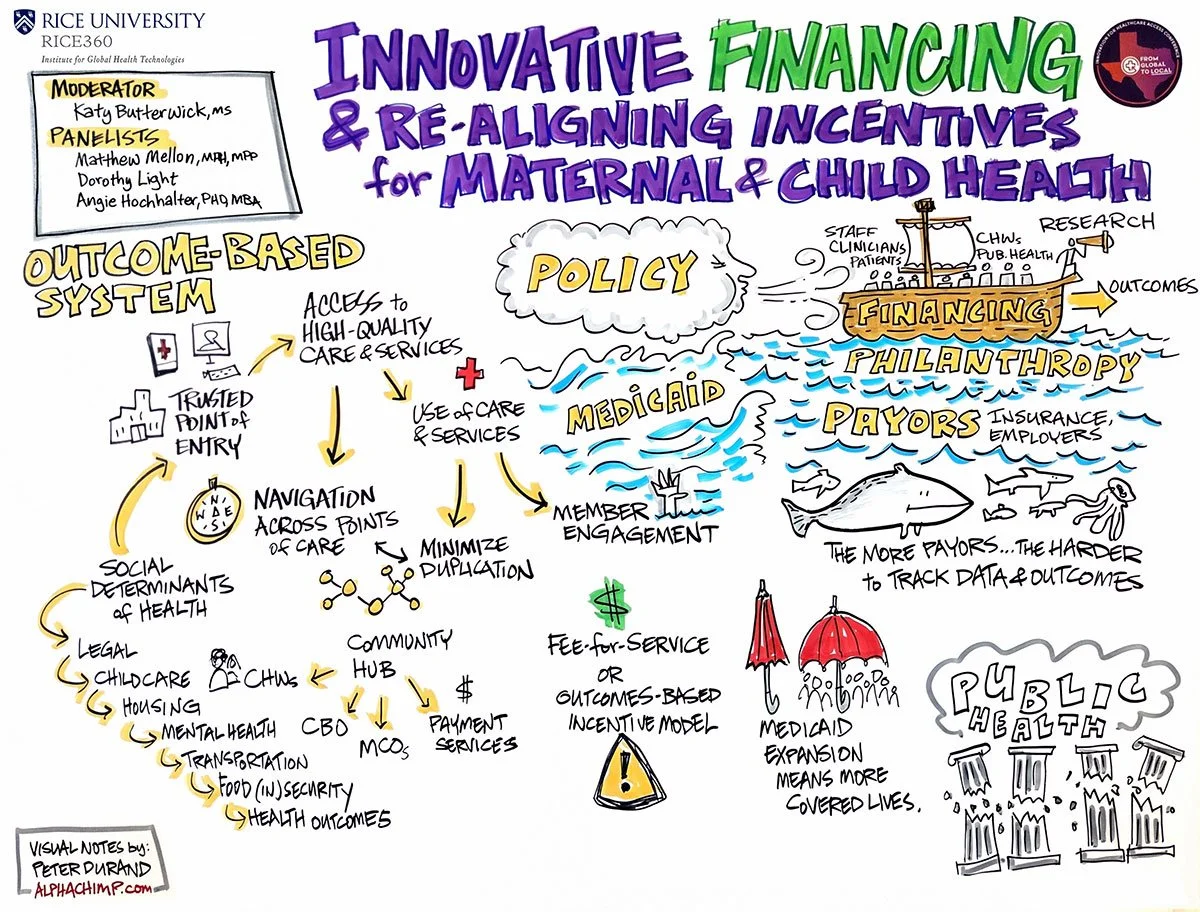
A financing panel mentioned the metaphor of a ship to explain the problem.
Financing carries clinicians, community health workers, and researchers toward outcomes, across waters churned up by policy, Medicaid, philanthropy, and a school of payors.
One line stuck out, “The more payors involved, the harder it gets to track data and outcomes.”
The panel weighed fee-for-service against outcomes-based incentives and noted that Medicaid expansion means more covered lives, which makes the design choices more consequential.
The Healthy Moms Advisory Committee Group, with Dr. Shreela Sharma of UTHealth Houston's Center for Healthy Communities, put the people receiving care at the center. What works is feeling heard, concrete follow-up that connects patients to food, shelter, and prescriptions, and community-centered design.
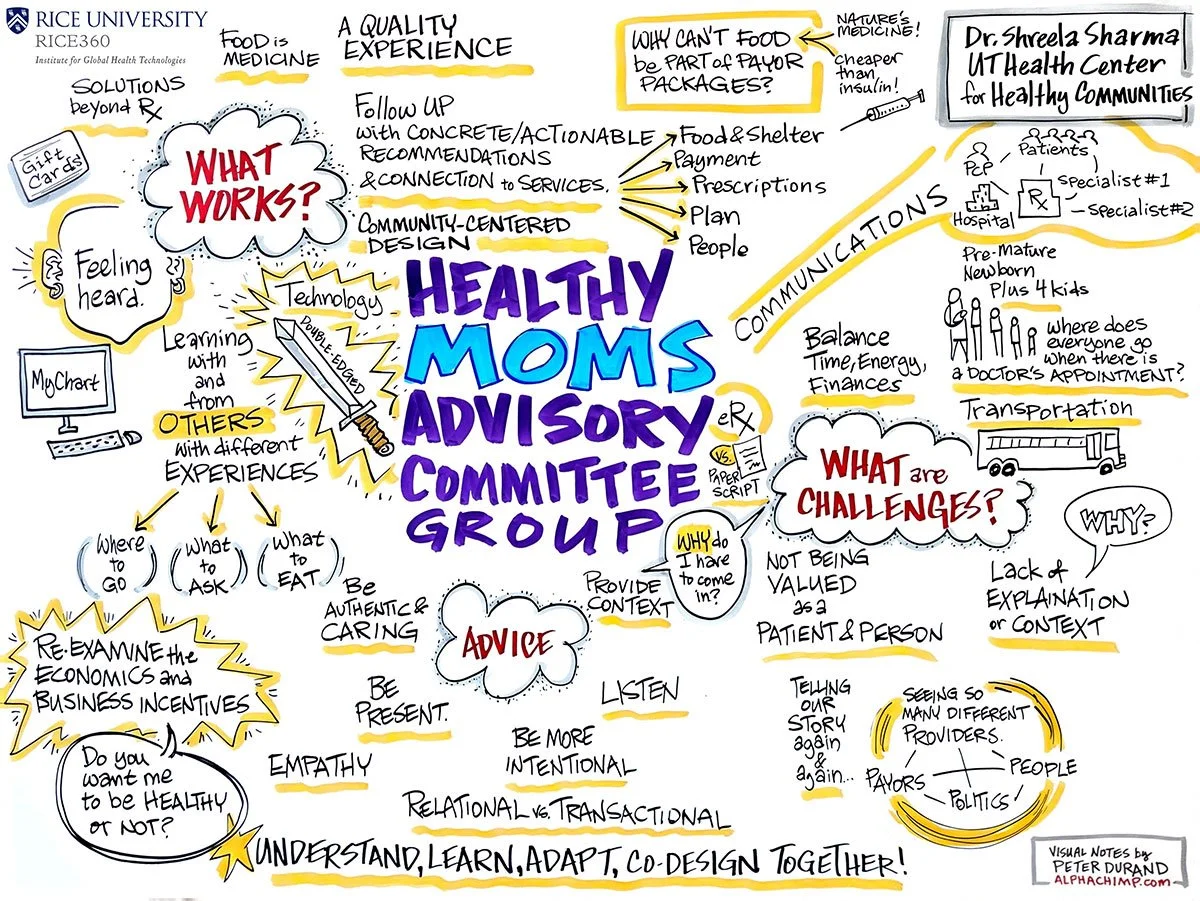
What doesn't is not being valued as a patient and a person, telling your story again and again to a parade of providers, and appointments with no explanation. Their advice came down to being present, listening, and shifting from transactional to relational care. The boldest question is "Do you want me to be healthy or not?"
Policy across a lifetime
The policy panel zoomed out to the full lifespan, from prenatal care through childhood, childbearing years, menopause, aging, and end of life.
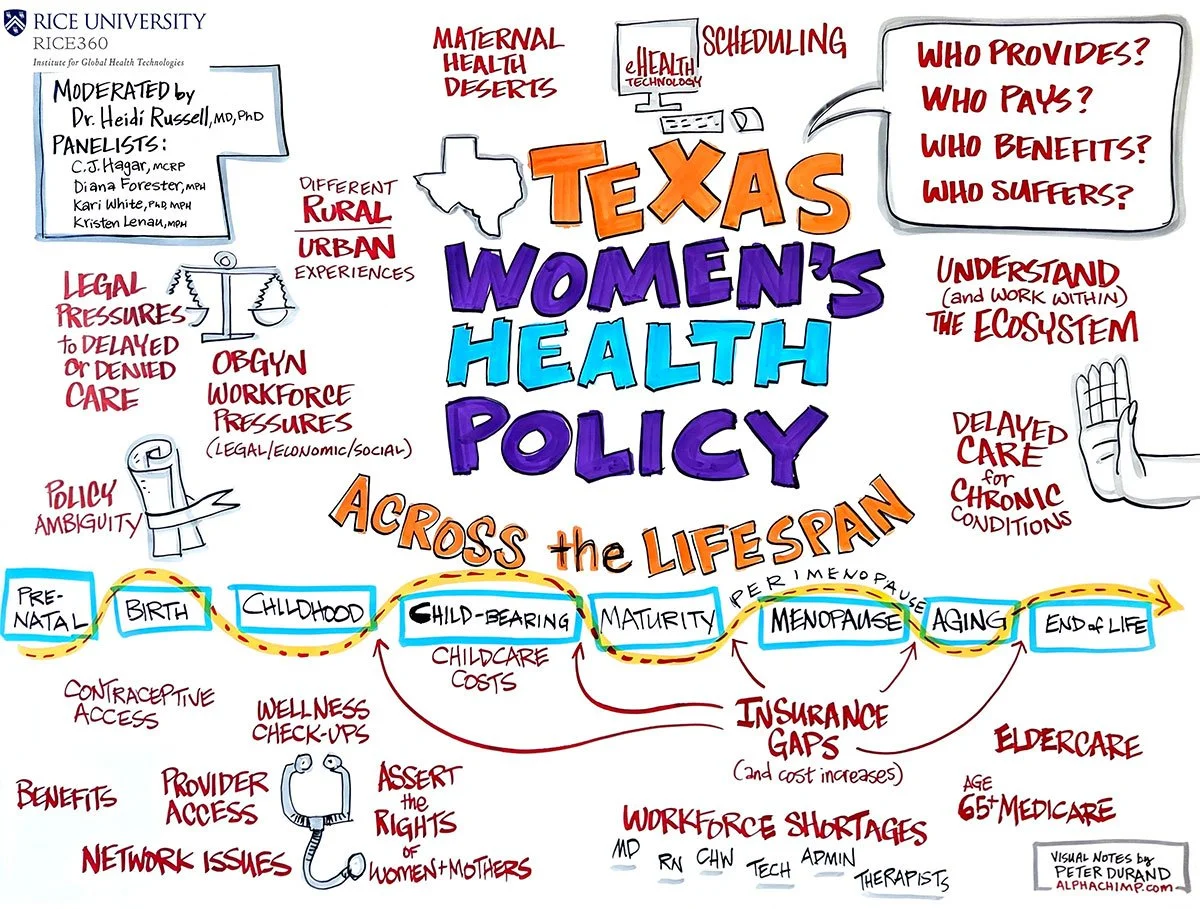
Along that path they marked the pinch points: insurance gaps, workforce shortages, legal pressure on OB-GYN care, ambiguous policy, and delayed care for chronic conditions.
Four questions framed the session:
Who provides?
Who pays?
Who benefits?
Who suffers?
Engineering and digital tools: a quick tour
The biomaterials session made a case that women live longer but not healthier, in part because research has historically relied on male subjects and underinvested in women's health.
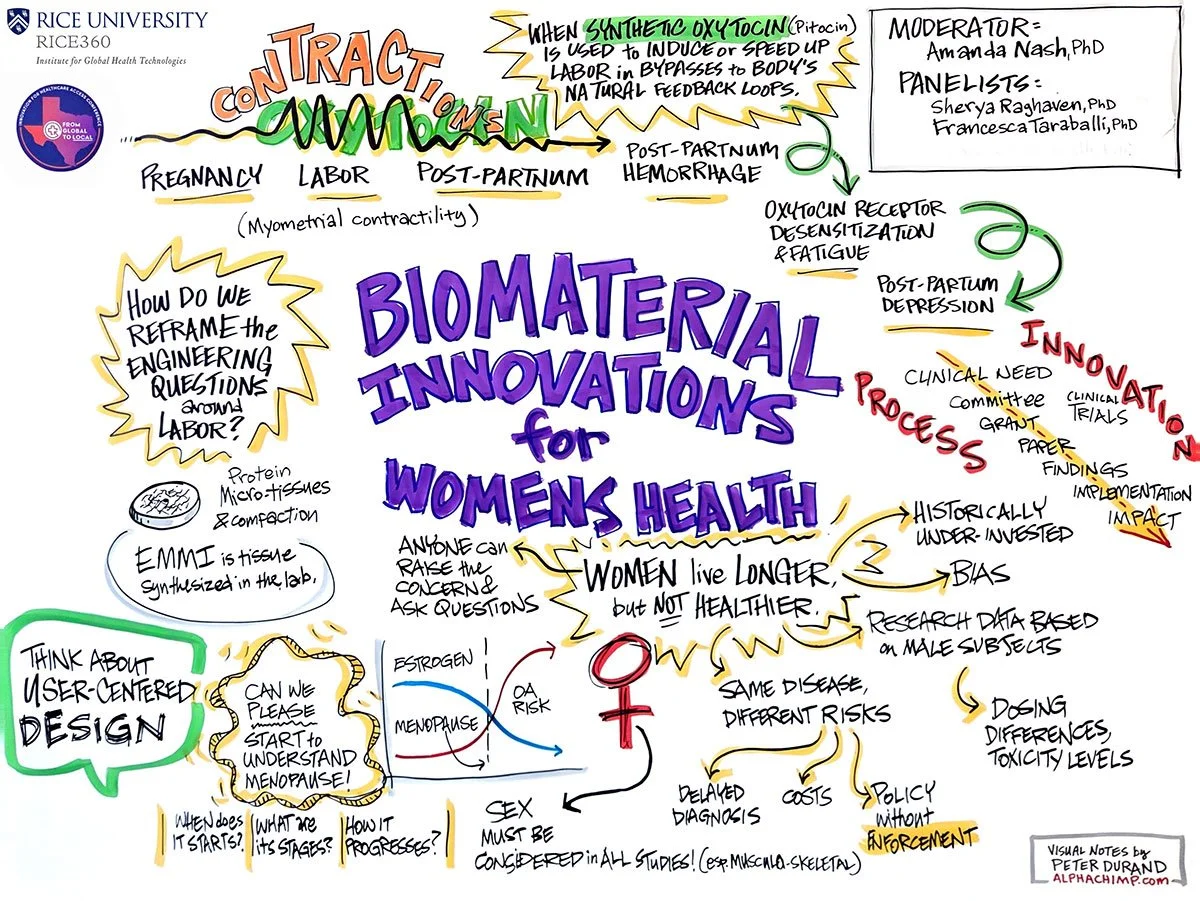
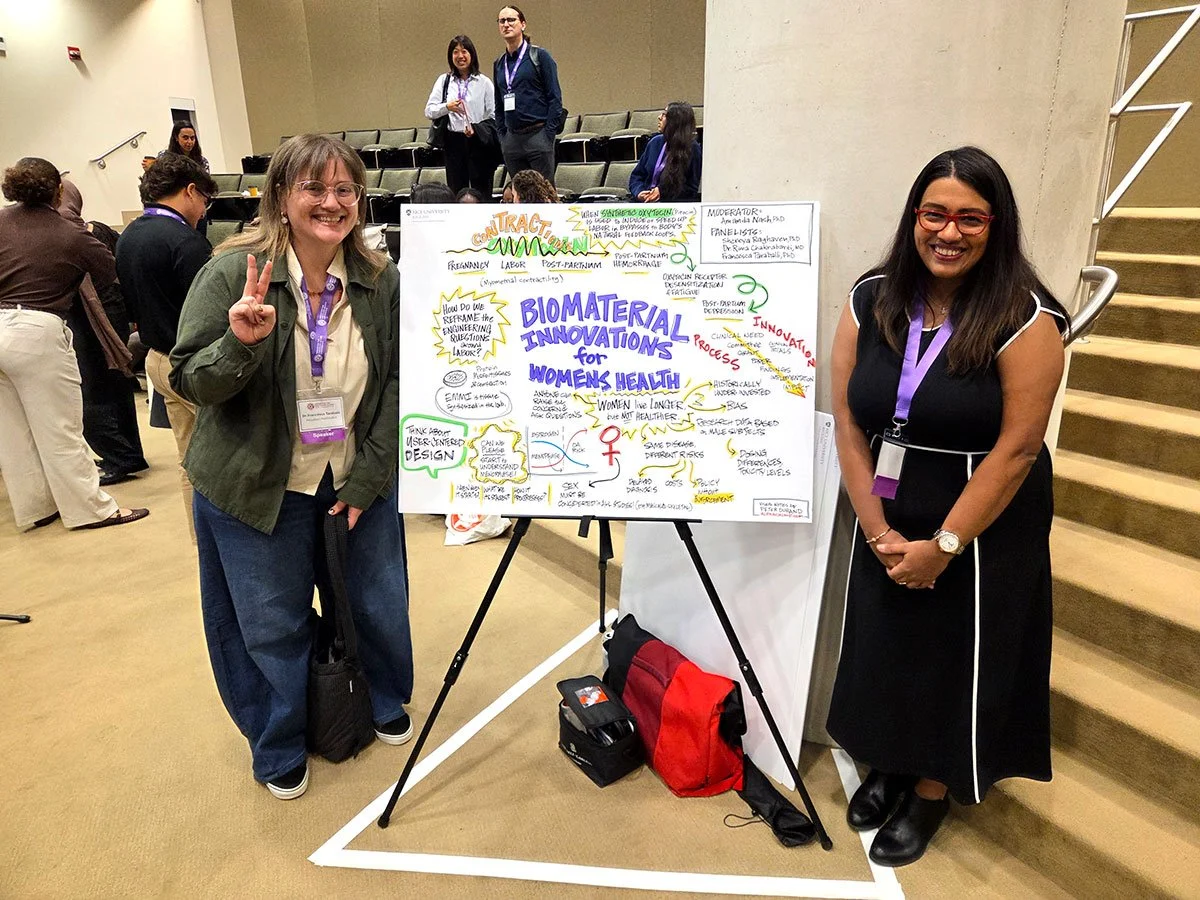
The panel talked about lab-grown tissue models and about how synthetic oxytocin used to speed labor bypasses the body's natural feedback loops.
A major takeaway for researchers:
Sex must be considered in all studies, and someone please start taking menopause seriously.
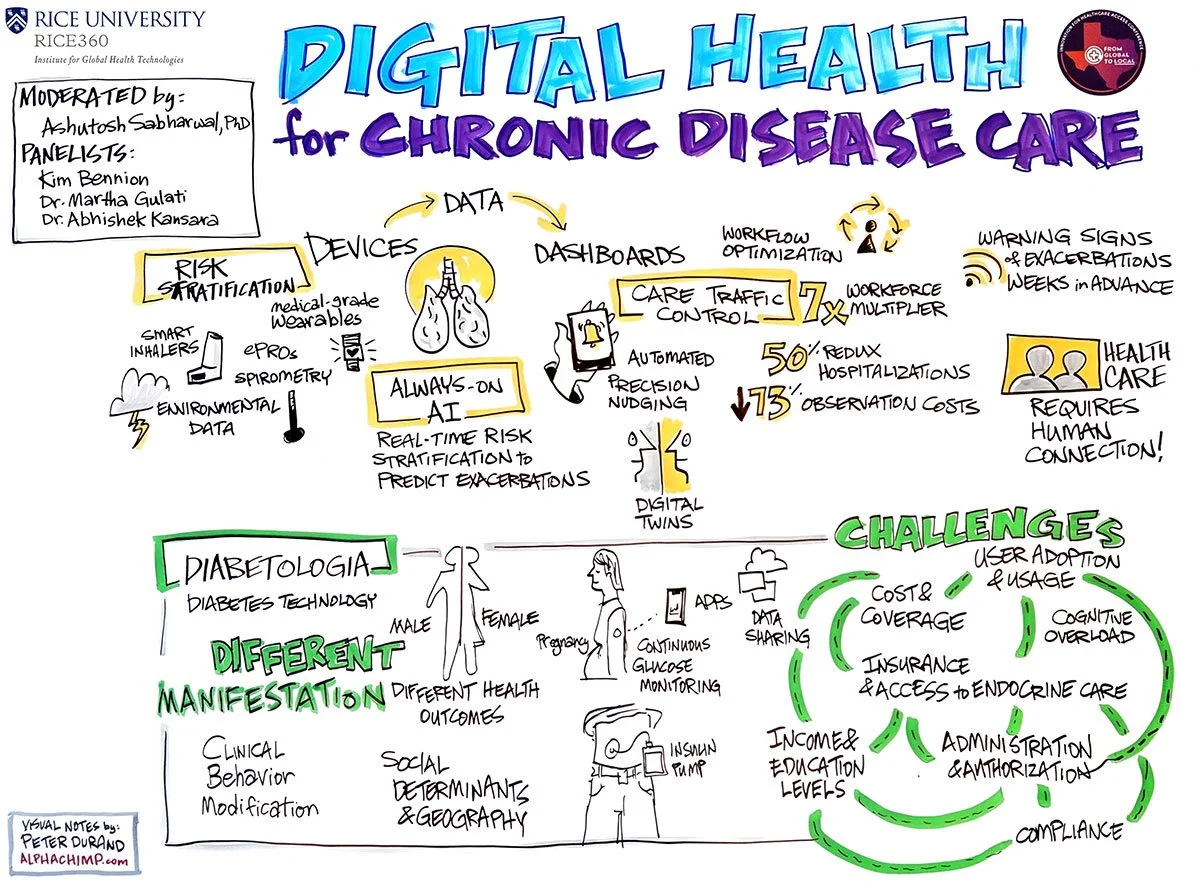
On the digital health panel, smart inhalers, wearables, and always-on risk models flagged warning signs of chronic disease flare-ups weeks in advance.
One program the panel described reported 50 percent fewer hospitalizations and a 73 percent drop in observation costs.
The challenges were just as telling:
Cost and coverage,
User adoption,
Cognitive overload, and…
A reminder drawn in the corner that health care still requires human connection.
Why healthcare benefits from Live Visuals

Over two days, speakers moved from biomaterials to financing models to community advisory boards, and every session used a different vocabulary.
Graphic recording and live illustration lets a mixed room of engineers, clinicians, payors, and community members see the connections while the conversation is still happening, and walk out with a record they can use on Monday morning.
If you're planning a convening where the ideas can't afford to get lost, then let’s talk: tell me about your upcoming conference or event.
Thank you to the Rice360 team for having me in the room, and to every keynote, panelist, and community voice who let me draw their ideas.